Body type from a photo
Upload a full-length photo — we’ll work out your body type from the proportions of your shoulders, waist and hips. Enter your height and we’ll estimate your measurements and clothing size.
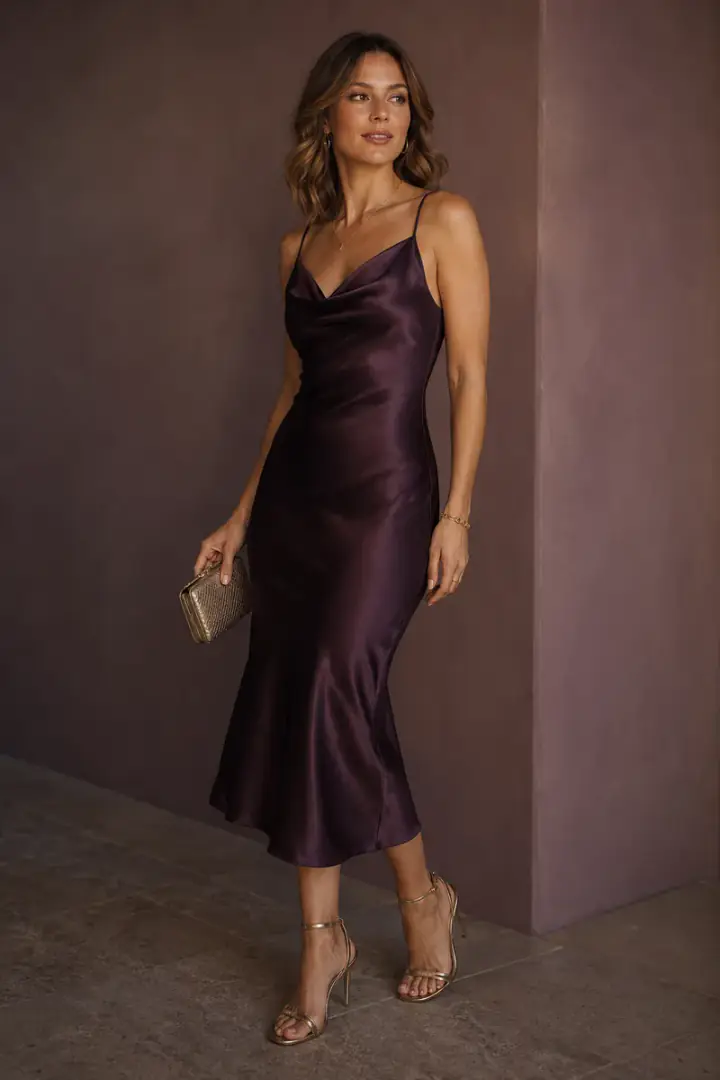
With your height we’ll calculate measurements in centimetres; without it — only proportions and type.
Your body type and measurements will appear here. The photo never leaves your device.
What suits your type
Swipe right if you like the look, left if it’s not for you. The type is filled in automatically after the photo or measurements analysis, or you can pick it manually.
Know your measurements? We’ll be more precise
A tape measure is more accurate than a photo. Enter three measurements and we’ll show your body type and size.
Enter three measurements
Bust — at the fullest point, waist — at the narrowest point, hips — at the widest.
What each one looks like and what suits it
Hourglass
Shoulders and hips are about the same width, the waist is noticeably narrower: smaller than the bust by a quarter or more.
Emphasise the waist: wrap dresses, fitted jackets, belts, a high rise. Straight, baggy silhouettes hide it.
Read more →Pear
Hips are wider than the shoulders and bust, the waist is defined. This type is also called a triangle.
Focus on the top: light and bright tops, a boat neck, voluminous sleeves, jackets with structured shoulders. Keep the bottom dark, straight or A-line. Patch pockets and light skinny trousers add volume to the hips.
Read more →Inverted triangle
Shoulders or bust are wider than the hips; the hips are narrow.
Move the volume down: A-line skirts, wide-leg trousers, a light bottom half. Keep the top simple, with a V-neck. Shoulder pads, a boat neck and voluminous sleeves widen the shoulders.
Read more →Rectangle
Shoulders, waist and hips are similar in width; the waist is only slightly defined.
Create a waist with clothes: belts, a peplum, a wrap, draping, contrasting colour blocks. Layers and textures work well. A straight dress without a belt makes the silhouette flat.
Read more →Apple
The waist is close to the bust and hips in width, or wider. Legs and arms are usually slim.
Vertical lines and your strong points on show: a V-neck, open jackets and cardigans, a raised waistline, straight trousers. Clingy knits and a belt at the widest part emphasise the tummy.
Read more →What kind of photo works
- Full-length, from the top of your head to your heels, camera at waist level.
- Standing straight, facing the camera, arms slightly away from the body.
- Fitted clothes: loose items and outerwear add centimetres.
- Barefoot or in flat shoes, hair tied back, plain background.
How accurate are measurements from a photo
A photo only shows the width of the body from the front. We estimate circumference from average proportions, so an error of 3–5 cm is normal, and more in loose clothes. That’s enough for finding your body type and size, but not for tailoring.
A body type isn’t a rating or a diagnosis. It suggests where clothes should add volume and where to take it away, so the silhouette looks balanced.
You know your type — now try the looks
In the LOOKSI app, clothes are tried on your own photo: you see how a cut sits on your figure, not on a model.
Try on clothes →Common questions
Is it free?
Yes, with no sign-up and no limit on the number of tries.
Where is my photo sent?
Nowhere. The model runs right in the browser; the photo never leaves your device and isn’t stored anywhere.
How is body type determined from a photo?
The model finds your shoulders, waist and hips in the photo and measures the width of the silhouette at those levels. One of five types is matched from the ratio of the three widths.
Can you find your measurements and clothing size from a photo?
Roughly — yes. Your height is needed: it’s used to convert pixels to centimetres. Circumferences are estimated from the silhouette width to within 3–5 cm, and size from bust and hip measurements.
Why does the result differ between photos?
Pose, angle and clothing change the silhouette more than you’d think. Arms pressed to the body widen the waist, and shooting from above narrows the hips. Compare photos taken the same way.
What body types are there?
Five: hourglass, pear, inverted triangle, rectangle and apple. They differ in how the shoulders, waist and hips relate to each other.
Does body type change when you lose weight?
Usually not: the shoulder-to-hip ratio is set by the skeleton. What changes is how defined the waist is, so rectangle and apple can turn into each other.
What if I’m between two types?
Look at the main trait — the widest part and how defined the waist is — and take advice from both types. Pure types are rare.